Fuel Automation in Syria and the Reconstruction Market: Opportunities and Field Conditions
In regions undergoing reconstruction, construction, energy, and logistics projects are intensifying. In these markets, fuel control is critical for both cost and security. We examine the field conditions and the right installation model.
In regions entering a reconstruction phase, construction, energy, infrastructure, and logistics projects intensify within a short time. What these projects have in common is a fleet of heavy equipment, remote sites, and high fuel consumption. Syria and similar reconstruction markets present both a major opportunity and their own distinct challenges when it comes to fuel automation. In this article, we examine why fuel control is critical in these markets and what the right installation model looks like.
What makes the reconstruction market different?
- High project density: Within a short time, numerous construction sites, power plants, and infrastructure projects run simultaneously.
- Challenging field conditions: In most places the electrical grid is inadequate or nonexistent, and sites are far apart.
- Security and accountability: Because fuel is a high-value and easily transportable asset, preventing loss and misuse is a priority.
- Need for rapid deployment: Projects start quickly, so the installation must be fast and portable as well.
Why is fuel control critical in these markets?
In reconstruction projects, fuel is one of the largest variable items in the budget. Because of the remoteness and mobility of the site, the risk of loss, misuse, and measurement discrepancy is high. An uncontrolled tank is exposed to refueling by unidentified vehicles and to overnight fuel siphoning. For this reason, the goal is not only to prevent theft, but to record every drop by vehicle, operator, and time.
The right installation model
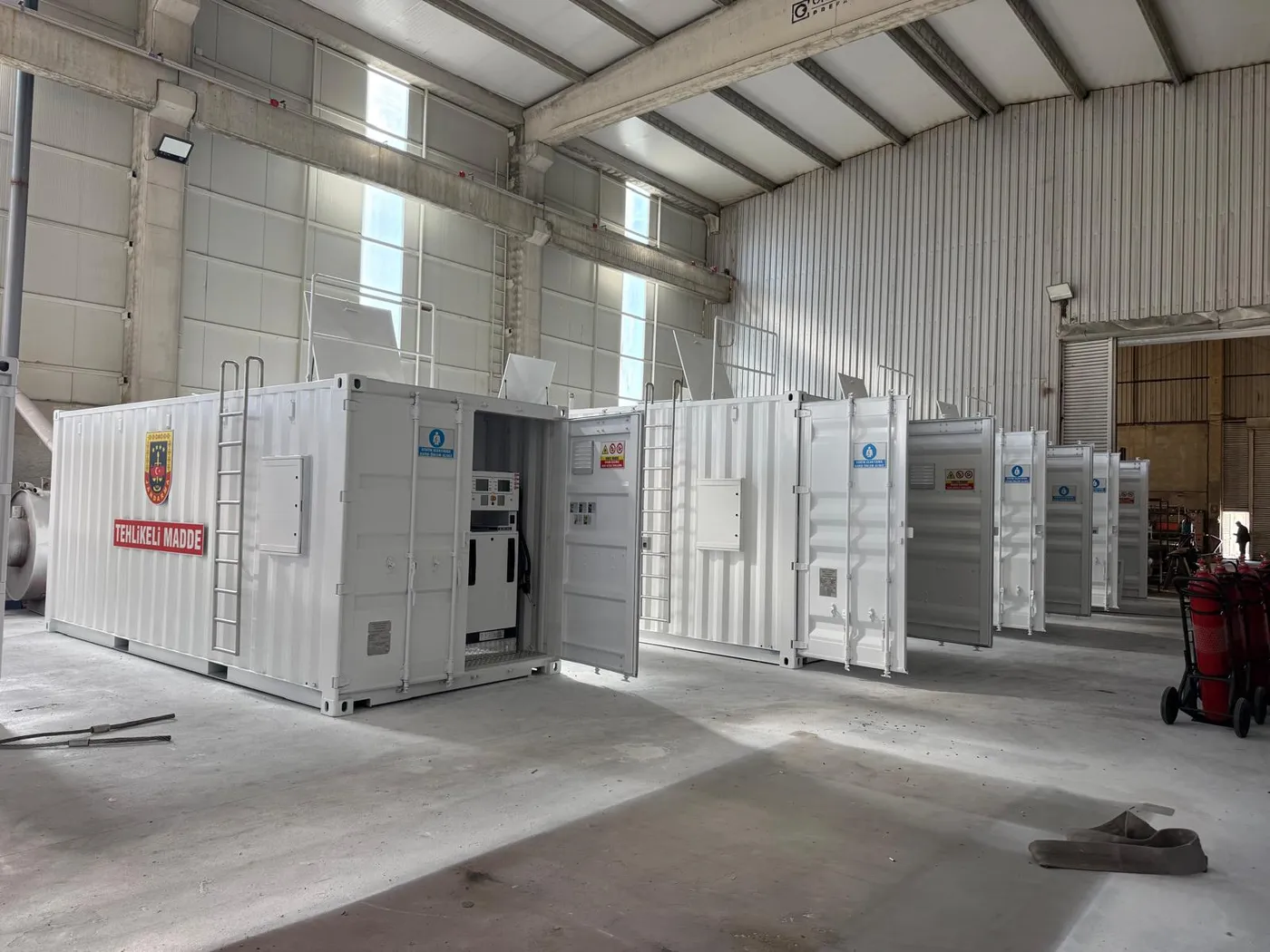
Mobile / container station
At sites where building a fixed station is impractical, a mobile container station can be deployed quickly and relocated as the project progresses. It is ideal for short-term and roaming projects.
Off-grid operation (solar-powered + GSM)
At remote sites with no electrical grid, the system runs on solar power and GSM; once a connection is available, the data synchronizes with the center. This way, no matter how remote the site, control continues uninterrupted.
Authorized refueling with vehicle identification
With the vehicle identification system, only defined vehicles refuel within defined limits. Every refueling is automatically recorded to the vehicle; unauthorized use is blocked.
Mobile tanker automation
If refueling is done on site with a roaming tanker, a meter integrated into the tanker together with vehicle identification records every fill-up by vehicle, liters, and location. Roaming refueling, the weakest point of control, is put on record.
Centralized monitoring and reporting
All sites are consolidated in a single central dashboard; it becomes clear how much fuel is consumed on which project and where any anomaly occurs.
Regional experience
In regions with a high density of infrastructure and construction projects, such as the Caucasus, the Middle East, and Central Asia, field conditions are similarly challenging: scattered sites, inadequate grid coverage, and high mobility. In projects in these regions, mobile stations, off-grid operation, and roaming refueling automation are the standout requirements.
Conclusion
Reconstruction markets are the areas where the return on automation is highest, owing to heavy fleets and high fuel consumption. When mobile/container stations, off-grid operation, vehicle identification, and centralized monitoring come together, every drop is recorded no matter how remote and mobile the site. In these markets, control protects both cost and security at the same time.